

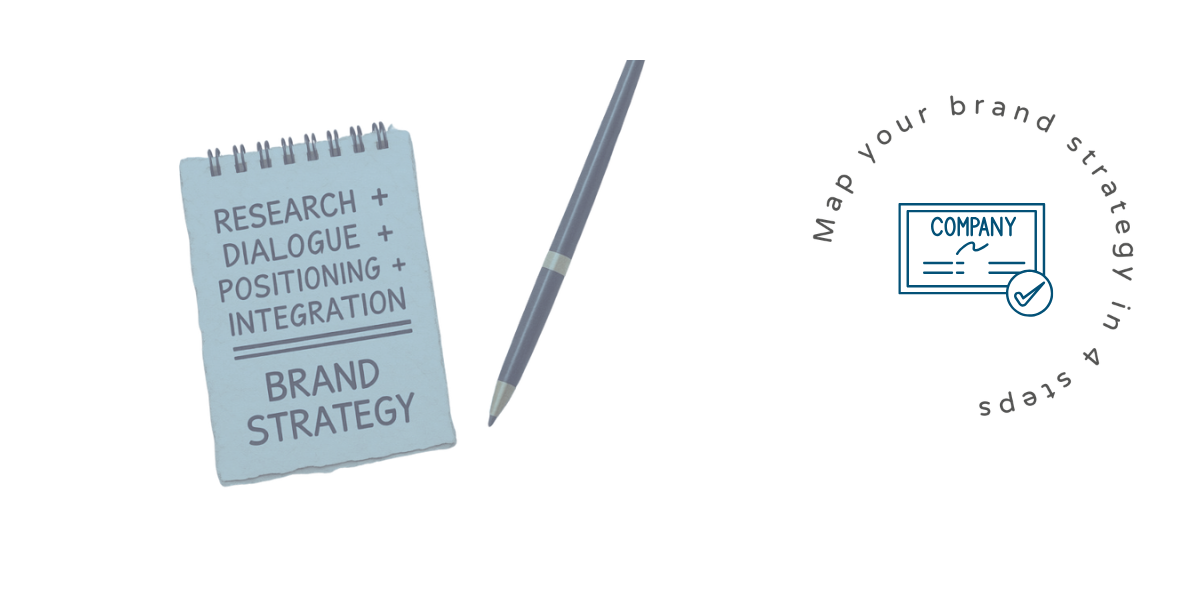
Brand strategy is vital toward developing and maintaining a strong brand-customer relationship. After all, it takes constant attention to communicate well. Without proper time and planning devoted toward reflection and differentiation, brands run the risk of being careless, overlooked, or ineffective.
Brand strategy is an aspirational marketing playbook and reference guide defining how you want your brand to be perceived, consistently. Such strategy includes brand-specific characteristics, demographic and behavioral aspects about your intended audience groups, and parameters for messaging and design, which are shaped by brand goals and culture, customer needs, industry and societal factors, and communication trends.
The psychological and emotional closeness we experience with own lives or our own brands can make it challenging to maintain a holistic self-awareness. This is why I recommend a discovery process of viewing a brand from the outside first and then focus inward: industry, competitors, customers and target audiences, employees, and the brand itself.
Ideally, your research will combine primary and secondary data — information you collect and information collected by other reputable sources. When devising brand strategy questions, think of your brand’s impact on others, whether you’re using existing data or collecting new data.
By reviewing industry challenges and trends, you’ll be able to see where your brand can jump ahead or where it seriously needs to catch up. Industry challenges that have “always been that way” or seem overwhelming are opportunities to create dialogue and/or change.
Your competitive analysis should always be done with the intent of further differentiating your brand. Learn from your competitors, but resist chasing after them on everything. Your brand path is uniquely yours. Own it.
If you aren’t already gathering customer feedback, start now. Use this opportunity to engage your customers on a regular basis through surveys, focus groups, contests, and social media.
Employees can provide a macro view of product performance and service engagement. Are you capturing that data?
Gather data through brand analytics. Using your unique brand strategy questions, gather data from your CRM, Google Analytics, Google Search Console, SEMrush, Moz, and other performance data.
If you or your team want to cultivate greater self-awareness prior to your next brand strategy session, read this article from Harvard Business Review. It hits branding right at its core with this statement, “Self-awareness isn’t one truth. It’s a delicate balance of two distinct, even competing, viewpoints.” Balancing brand goals and customer needs is vital to brand health. There’s also research on strengthening brand building strategies through the art of reflection that can be applied across your organization.
Should you be in the process of naming your business (or renaming it), consider conducting that process alongside your brand strategy process.
Brand strategy research is best discussed with a small team of your brand leadership and highly effective employees. Depending on the size of your organization and sensitivity of information, vendors, and customers may be invited into the discussion. All participants should be bound to confidentiality and encouraged to provide constructive feedback, as opposed to airing negativity without potential solutions.
Maintaining a spirit of open communication can be among the most challenging aspects of the brand dialogue phase. If your brand is already accustomed to soliciting and integrating feedback, within a welcoming culture, you have an incredible advantage in creating ongoing brand health. This is the phase to increase open communication and examine your brand from the represented perspectives.
Bring your group discussion around audience personas to define the edges of what target audiences need from your brand now and in the future. Audience personas aren’t static checklists describing your audiences. Rather, they serve as reference tools for ongoing relationship building throughout the customer journey.
Have a little fun with this phase, too. Imagine your brand as a car, an animal, or a video game. Let it get your mind functioning on a more conceptual wavelength. Then, imagine where your industry could go in comparison to other industries, or in terms of a higher dimension of service and innovation. Let your brand lead the way, playing on your strengths.
Build brand positioning from your research and dialogue. This includes core messaging, which you’ll use for greater consistency in marketing communications. Such messaging includes your positioning statement, emotional and functional benefits, brand traits, and tone. Brand guidelines follow along with this consistency by designating parameters for fonts, colors, logo usage, and imagery. Reliability and consistency put customers at ease, opening the door for greater engagement and brand loyalty.
Be sure to include brand objectives (e.g. brand awareness, image, loyalty, engagement, or equity) during your integration process, too, so you’ve clarified how you’ll prioritize your efforts going forward. Then, train your employees and any external support teams on how to use your new brand strategy.
Brand marketing comes next as you prioritize your best marketing channels and create a marketing content calendar , based on your new branding. This might sound like a lot of structure, but the best structures provide you with healthy boundaries for developing creativity that remains on brand.
Brand maintenance involves protecting your brand reputation. Check out this resource on developing a crisis communication plan to protect your investment.
Finding a brand consultant goes beyond securing someone with a strategic skill set. You want to work with an expert who’s a good listener, responsive, a solid project manager, clear on aligning expectations, creative, and courageous enough to tactfully work shoulder to shoulder with you on challenges and future opportunities. Suzette Garvey Creative provides a free consultation if you’ve got a brand strategy refresh or brand launch on the horizon.
All in all, brand strategy gives you some purposeful say in how your journey and story continues. Since we as people continue to develop, so do our communities, cultures, industries, and businesses. Stay proactive in your brand development by revisiting your brand strategy annually or every other year.